How Bambu Lab Finally Made 3D Printing Work for Everyone
Remember when 3D printing was supposed to revolutionise everything? For over a decade, we heard the promises that every household would have a printer, manufacturing would be democratised, creativity would be unleashed. Instead, most people's experience looked more like endless bed levelling, failed prints, and hours spent hunting through Thingiverse for that one decent design buried under thousands of plastic trinkets.
Bambu Lab changed that story completely, and the results are already visible in classrooms, workshops, and homes across the globe.
The Real Revolution: From Nerdy Hobby to Common Appliance
Teachers who once avoided 3D printing due to complexity are now embracing it because Bambu's printers actually work as advertised. Students can now iterate on their designs within single class periods instead of waiting days or weeks to see their work come to life.
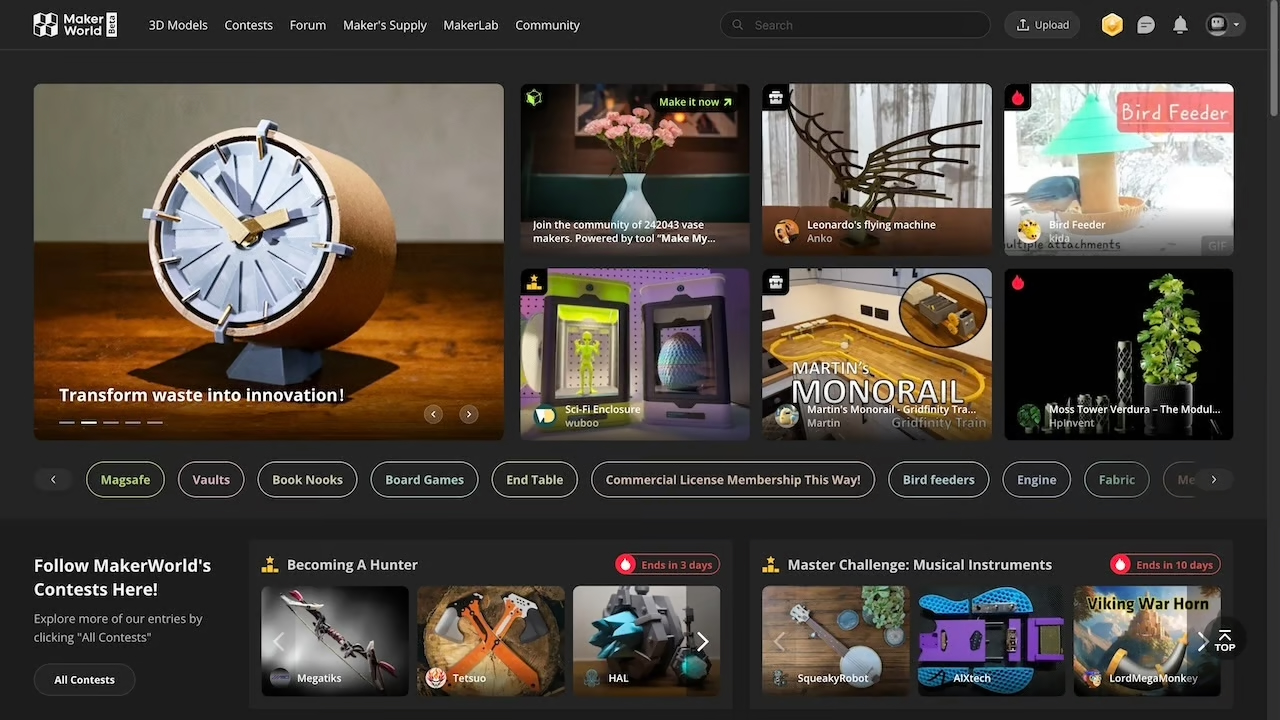
This isn't just about better hardware, though the reliability is game-changing. It's about Bambu Lab's Makerworld creating the first 3D printing platform that solves 'the design problem'. While other companies focused on faster printing or cheaper filament, Bambu realised the real bottleneck wasn't technical—it was finding quality designs worth printing.
Their approach is brilliantly simple: reward creators with discount codes for contributing good models, then let users stack those codes to purchase Materials and even Printers. Yes, you can literally design your way to a free printer…(*if you live in the US). Most companies would consider this financial suicide; Bambu saw it as community building!
Beyond the Maker Community
The impact reaches far beyond traditional makers. Desktop 3D printers are seeing "tremendous growth" among "small and medium-sized companies" and educational institutions, with the market expanding at over 23% annually. We're witnessing what happens when technology finally becomes accessible enough for regular people to use.
What's remarkable is the quality of objects people are now printing at home. Custom gaming controllers with your name embedded in the grip. Intricate jewellery pieces that would cost hundreds at a boutique. Miniature architectural models of your dream home. Cosplay helmets and props that rival professional costume shops. Personalised desk lamps with geometric patterns that cast stunning shadows. Board game organisers designed specifically for your favourite games.
These aren't novelty items—they're functional solutions that often surpass what you'd find in stores because they're designed for your specific situation. A custom spice rack that fits your exact cabinet dimensions will always work better than a generic one-size-fits-all version.
From Consumer to Creator
This shift is fundamentally changing how we approach problem-solving. Instead of adapting our needs to available products, we're designing products around our needs. The psychological impact is profound—there's genuine satisfaction in creating something uniquely yours, something that works exactly as intended because you made it yourself.
Elderly hobbyists are printing custom garden tools. Teachers are creating interactive learning materials. Small business owners are prototyping products without needing engineering degrees. The barrier that kept 3D printing locked in the domain of "nerds and tech-savvy tinkerers" wasn't the hardware—it was the entire user experience.
Bambu didn't just improve 3D printing; they made it feel like using any other appliance. Download, click print, get results. Revolutionary? Maybe… Effective? Absolutely! The promise of democratised manufacturing is finally being fulfilled, one perfectly printed design at a time.
*Makerworld discount codes - While it is unfortunate that this is not availably locally for New Zealanders we do get the benefit of a rapidly expanding catalogue of curated, high quality designs!