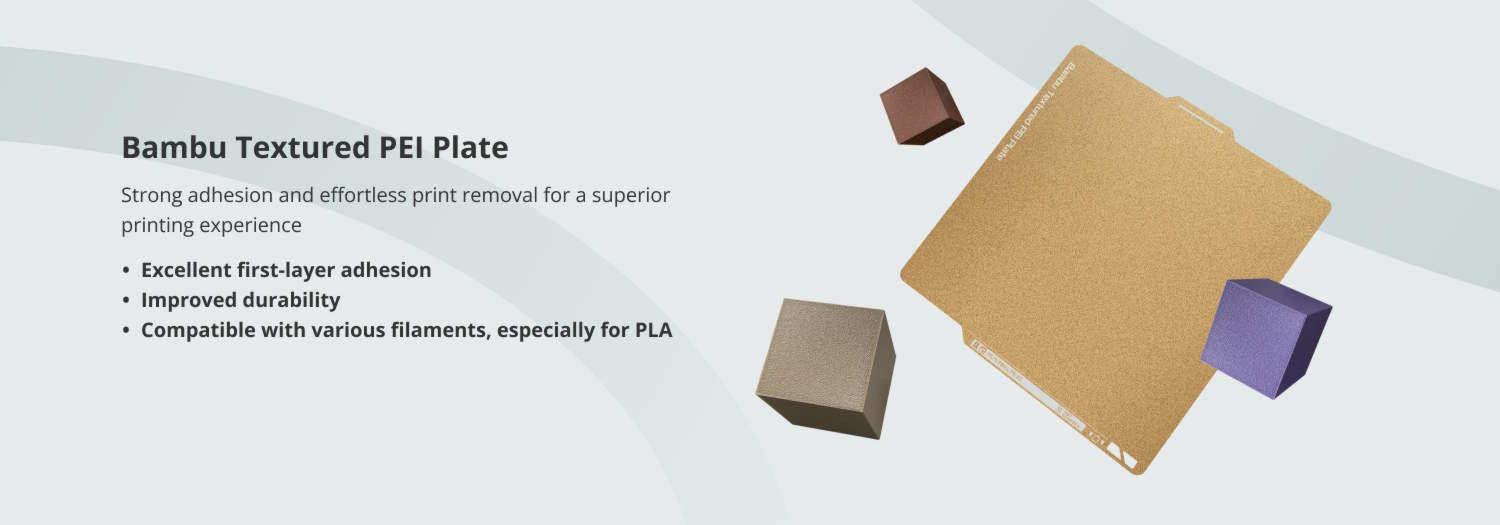
High Z-axis Precision Printing
Theuse of a Smooth PEI Plate contributes to improved Z-axis precision during the printing process, ensuring greater accuracy and consistency in the vertical dimension. These qualities make the Smooth PEI Plate an excellent choice for printing parts that demand a high level of fit accuracy, where precise alignment and tight tolerances are crucial. | 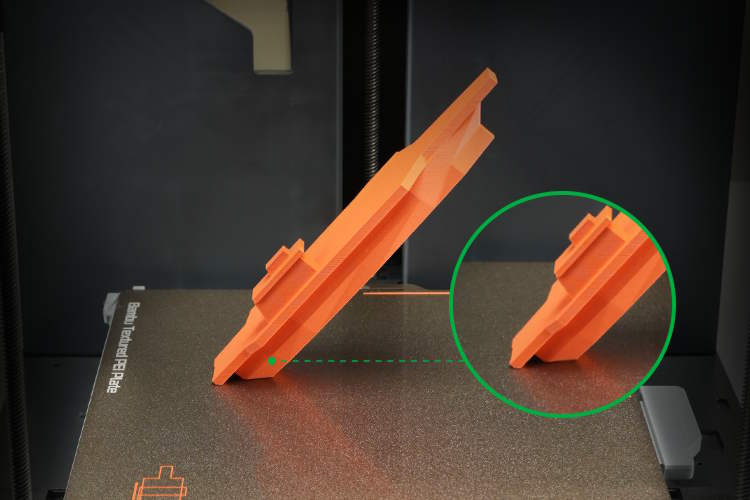 |
 |
Smooth and Matte Surface Finish
The use of a specially selected matte PEI sheet can
impart a smooth and matte texture to the bottom surface of the printed
object, enhancing its overall appearance.
|
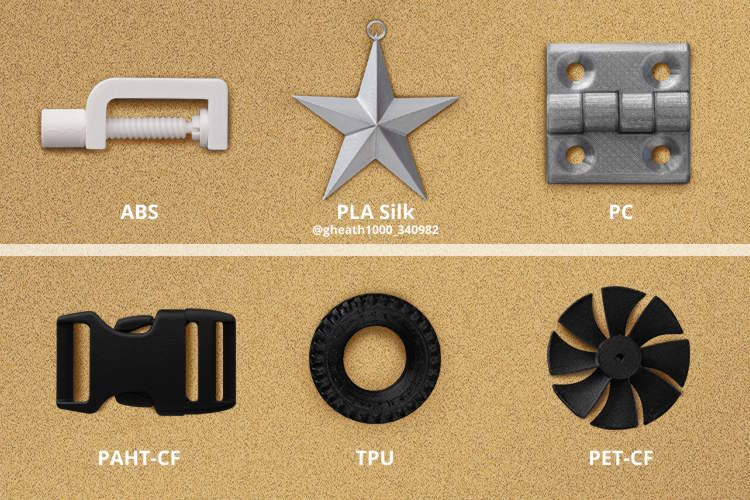
Compatible with Various Filaments
PEI enables printing not only with common materials
such as PLA, TPU, PETG, but also with materials that require high
temperatures like ABS and Nylon.
Note: Please apply glue to prevent the sheet from tearing if printing with filaments other than PLA.
|  |
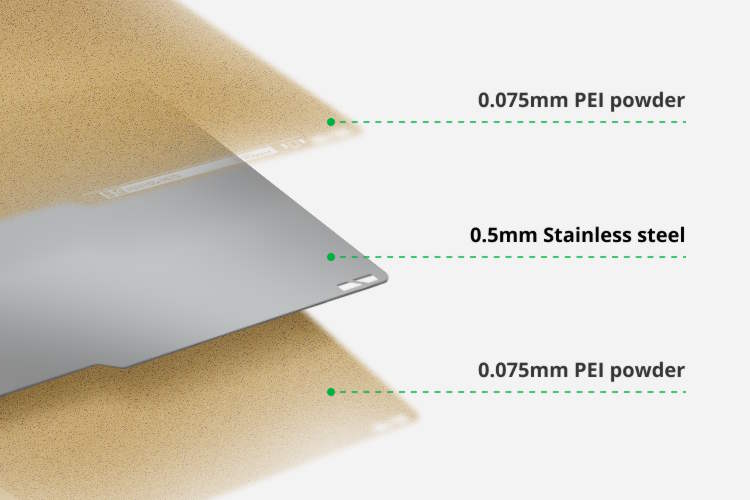 |
Reliable Magnetic Adhesion to Prevent Warping
The Bambu Smooth PEI Plate features a 0.5mm-thick
spring steel plate that enhances magnetic adhesion. This helps to
prevent warping and ensure optimal print quality during 3D printing. It
also helps when printing larger models with materials that are prone to
warping such as ABS, PC, and Nylon.
Note: The Smooth PEI Sheet cannot be peeled off from the build plates.
|
|
|
Considerations
- Increasing heatbed temperature enhances adhesion. Users need to
adjust the temperature of the heatbed based on their specific
requirements in order to achieve the most suitable level of adhesion.
- Before auto-leveling, it is necessary to repeatedly rub the nozzle
in the special wiping area of the build plate to completely remove any
residual material at the tip of the nozzle. The coating in the
special-designed wiping area will gradually become worn over time. This
is normal and does not affect print quality or nozzle lifetime, so there
is no need to worry about any quality issues.
- Deposition of dust and grease on the build plate decrease adhesion.
It is recommended to regularly clean the surface with detergent and
water to to maintain best adhesion.
- Bambu Lab recommends only using Bambu Lab official glue on the Bambu
Lab build plates, and can not be held responsible for any damage caused
to plates as a result of using third-party glue on build plates. Do not
clean the Textured PEI with Acetone, as it will damage the PEI surface.
- Always wait for a few minutes before removing printed models to
allow the plate to cool down for easy print removal. This prevents
damage to the plate and ensures a long lifetime of the product.
- Carefully sanding the surface with fine-grit (600 was recommended) sandpaper can help restore adhesion.
- The latest firmware brings significant improvements to the Bambu
Textured PEI Plate calibration using the Micro Lidar, and it is now
fully compatible with the automatic calibration process.
- The Textured PEI plate is considered a consumable part, which will
degrade over time. The warranty will only cover manufacturing defects,
not cosmetic damage like scratches, dents, or cracks. Defective sheets
upon arrival are the only ones covered by the warranty.
Recommended Settings
Please note that other slicer settings might need to be adjusted based on the printed model and the filament requirements.
| Materials |
Heatbed Temperature |
Glue Stick Required? |
Upper Glass Cover Plate Removed? |
| PLA/PLA-CF/PLA-GF |
45~60℃ |
No |
Yes |
| ABS (not for A1 mini) |
90~100℃ |
No |
No |
| PETG/PETG-CF |
60~80℃ |
No |
No |
| PET-CF (not for A1 mini) |
80~100℃ |
No |
No |
| TPU |
35~45℃ |
Yes |
Yes |
| ASA (not for A1 mini) |
90~100℃ |
No |
No |
| PVA |
45~60℃ |
No |
Yes |
| PC/PC-CF (not for A1 mini) |
90~110℃ |
Yes |
No |
| PA/PA-CF/PAHT-CF (not for A1 mini) |
90~110℃ |
Yes |
No |