The Manufacturing Catch-22
You've nailed your product design. Customers love the prototype. You're ready to manufacture. Then reality hits.
Traditional injection moulding? That'll be $70,000-$140,000 NZD for tooling, plus 8-10 weeks of waiting. If you discover even a tiny design flaw once customers start using it? Expensive mould modifications or start over completely.
You don't have to play that game anymore!
Welcome to the new era of Bridge Manufacturing
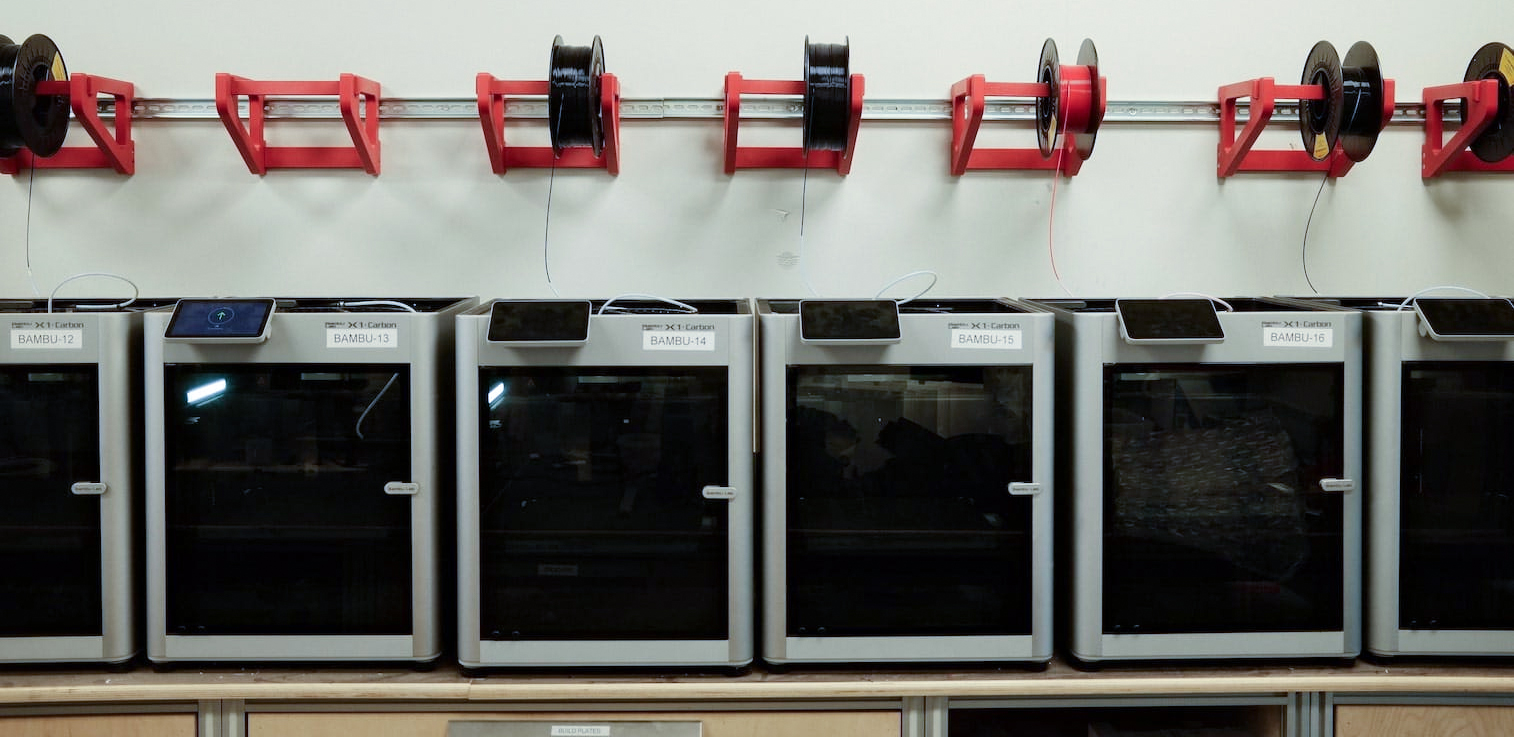
Smart companies are building production capability with print farms: fleets of 3D printers running in parallel. Think 50 Bambu Lab printers humming away, managed by software that orchestrates them like a symphony.
Here's where the math gets interesting: 3D printing can be considerably cheaper than injection moulding for anything under 20,000 units. For injection mounding the break-even point sits around 40,000-50,000 parts. For that crucial validation phase—your first 500 to 2,000 units—3D printing wins because there's no tooling cost.
Even better: while your competitor waits 10 weeks for their mould, you're already shipping, collecting customer feedback and implementing design refinements.
Why This Changes Everything
The real magic isn't just cost, it’s agility in a fast-moving economy.
Customers want a small tweak after launch? Maybe mounting holes need to move 3mm? With traditional manufacturing, you're stuck. With a print farm? Update the file, hit print, ship the improved version tomorrow.
One company restarted production in 7 hours using 3D-printed parts instead of waiting weeks for tooling. That could be the difference between staying in business and watching your production line sit idle.
This is "discovering the unknown unknowns"—you can't predict every issue until real customers use your product. Print farms let you iterate toward perfection instead of betting everything on one frozen design.
The Tech That Makes It Work
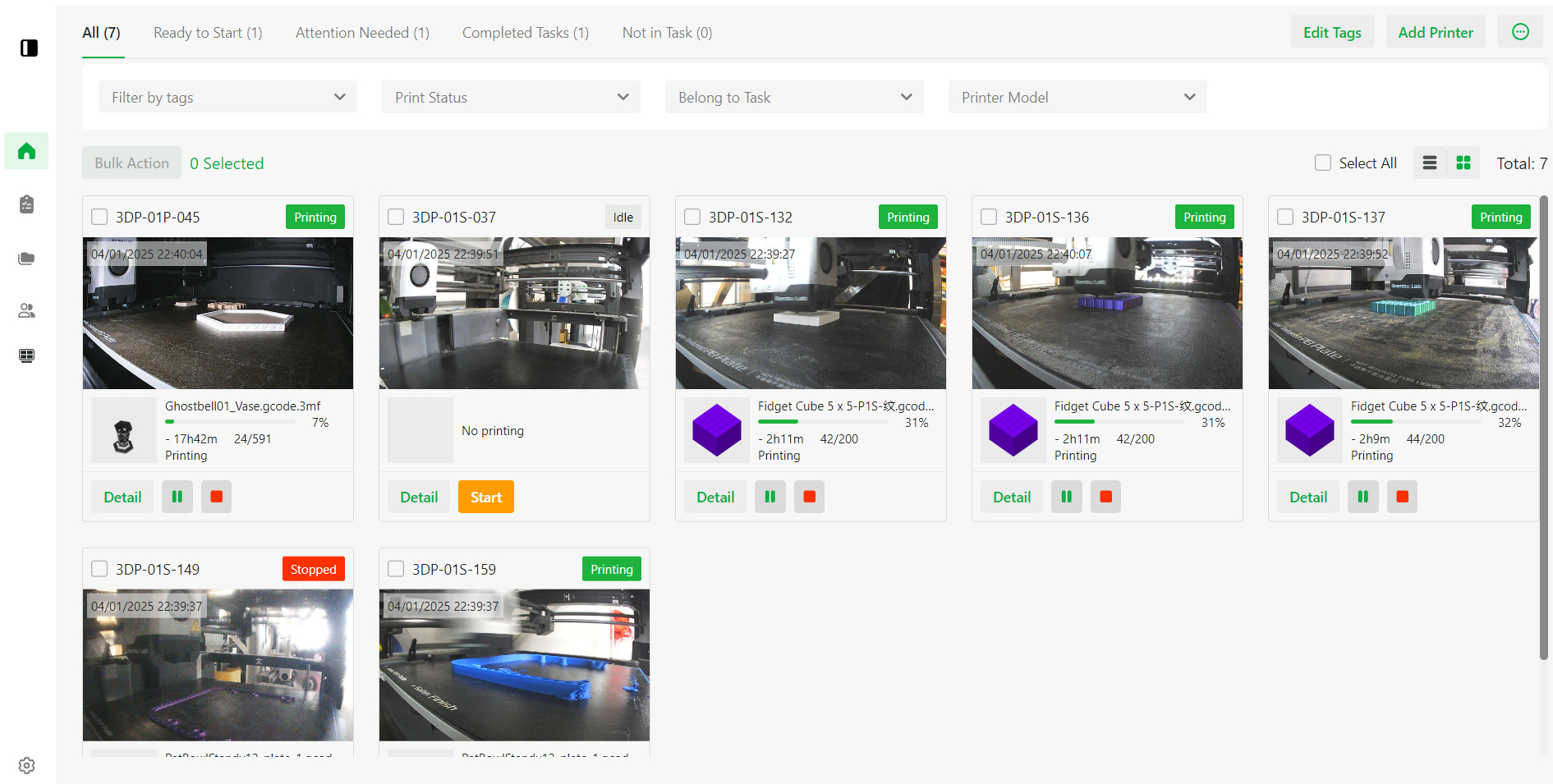
Bambu Lab's Farm Manager software (launched mid-2025) handles unlimited printers on your local network with real-time monitoring, automatic job queuing, and smart power management.
One operator in the Netherlands runs 35-45 Bambu printers, scaling based on demand. His clients require strict NDAs—everything stays local, fully encrypted, GDPR compliant. Total control.
When Does This Make Sense?
Print farms shine for new products with uncertain demand, anything under 20,000 units (sweet spot: 500-10,000), products needing customisation, and fast-moving markets where speed beats scale.
The hidden benefit? Your print farm isn't locked to one product. Unlike injection moulding tooling, those 50 printers manufacture whatever you need. Today it's Product A, next month Product B, next quarter both plus seasonal items. Flexibility you can't get any other way - Clearly this is the future!
The Bottom Line
The global 3D printing market reached $23.4 billion in 2025 and is growing at 23.4% annually—projected to hit $101.7 billion by 2032. This isn't experimental—it's production-ready, with over 4.5 million printers sold globally in 2024 alone.
Here's what it comes down to: Would you rather spend $100,000 NZD betting you've predicted the future correctly, or spend that on flexible manufacturing capability that adapts as you learn what customers actually want?
For many companies, bridge manufacturing isn't a temporary solution—it's the smarter way to manufacture, period.
-
Ready to explore what a print farm could do for your business? The MindKits team can help you evaluate whether this approach makes sense for your products.